Two more Vikram-1 flights
Skyroot has signalled up to two additional Vikram-1 launches this year, converting a test vehicle into a cadence.

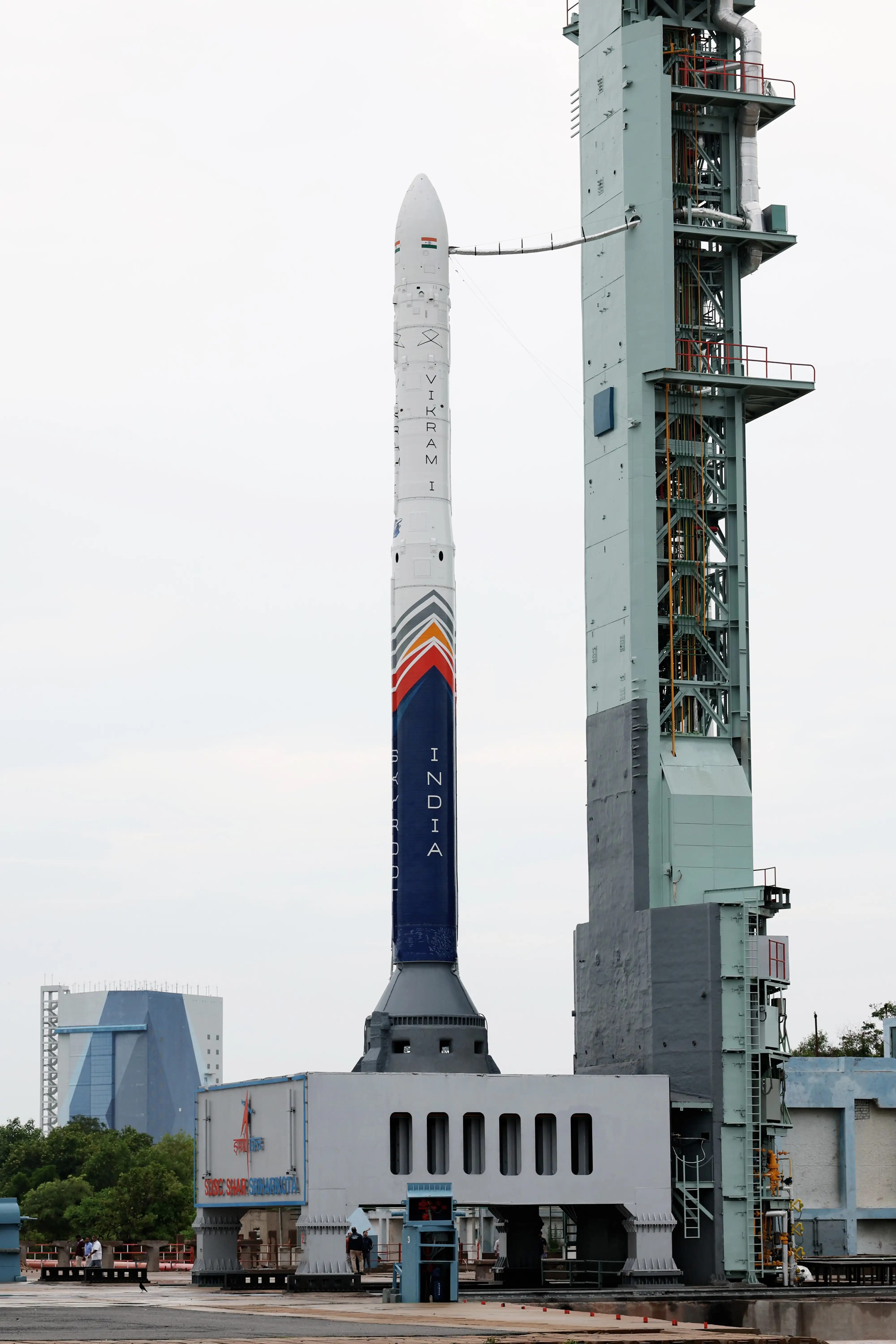
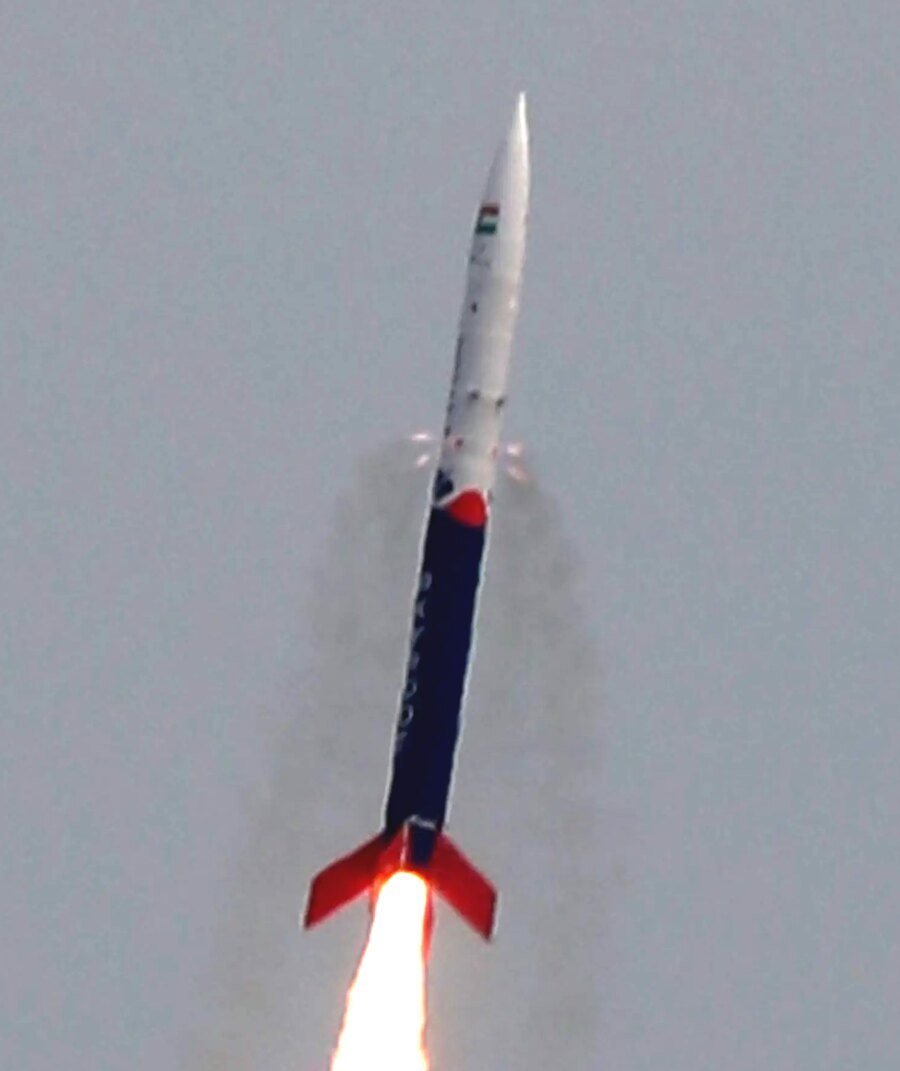
On 18 July 2026 at 12:05:30 IST, a 24-metre, four-stage rocket built by a company whose engineers average 28 years old lifted off from Sriharikota — and fifteen minutes later, India became the third nation on Earth where a private company put a payload into orbit.
Aagaman means arrival. Skyroot named the maiden flight of Vikram-1 for the moment India's private space industry stopped being a promise and became an address in low Earth orbit. It worked on the first attempt.
“Hello space, we have arrived.”
Skyroot Aerospace, minutes after orbital insertion
“A team with an average age of just 28 years has built India's first private orbital rocket.”
Pawan Kumar Chandana · Co-founder & CEO
Seven storeys of carbon fibre. Scroll to travel down the stack — or tap a stage to jump.Swipe through the stack — or tap a section of the rocket.

Note: published height figures vary between 20 m, 22 m and 24 m across sources; ~24 m matches the flight configuration quoted in launch coverage. Lift-off mass has never been publicly released by Skyroot — so it isn't listed here.
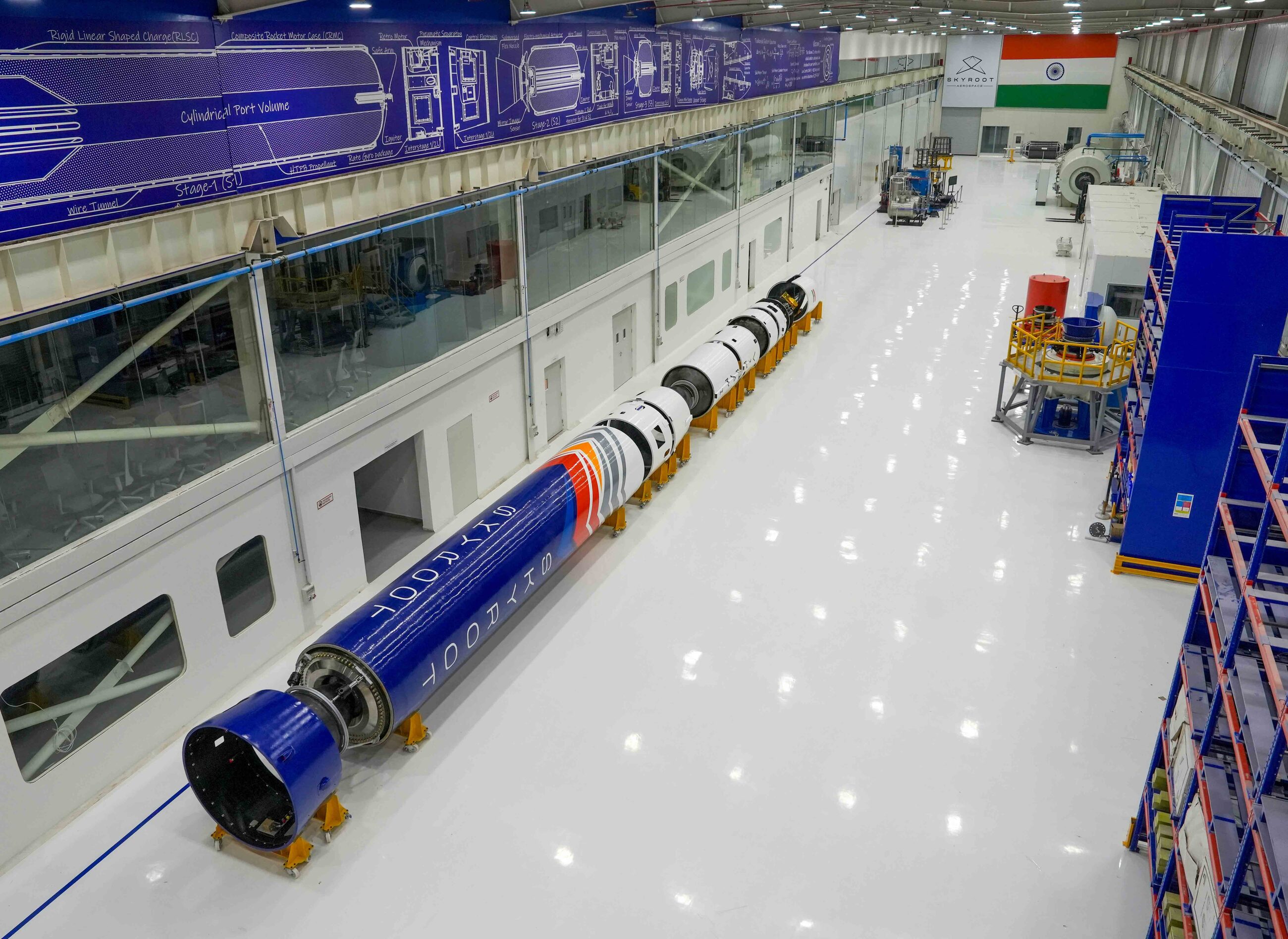
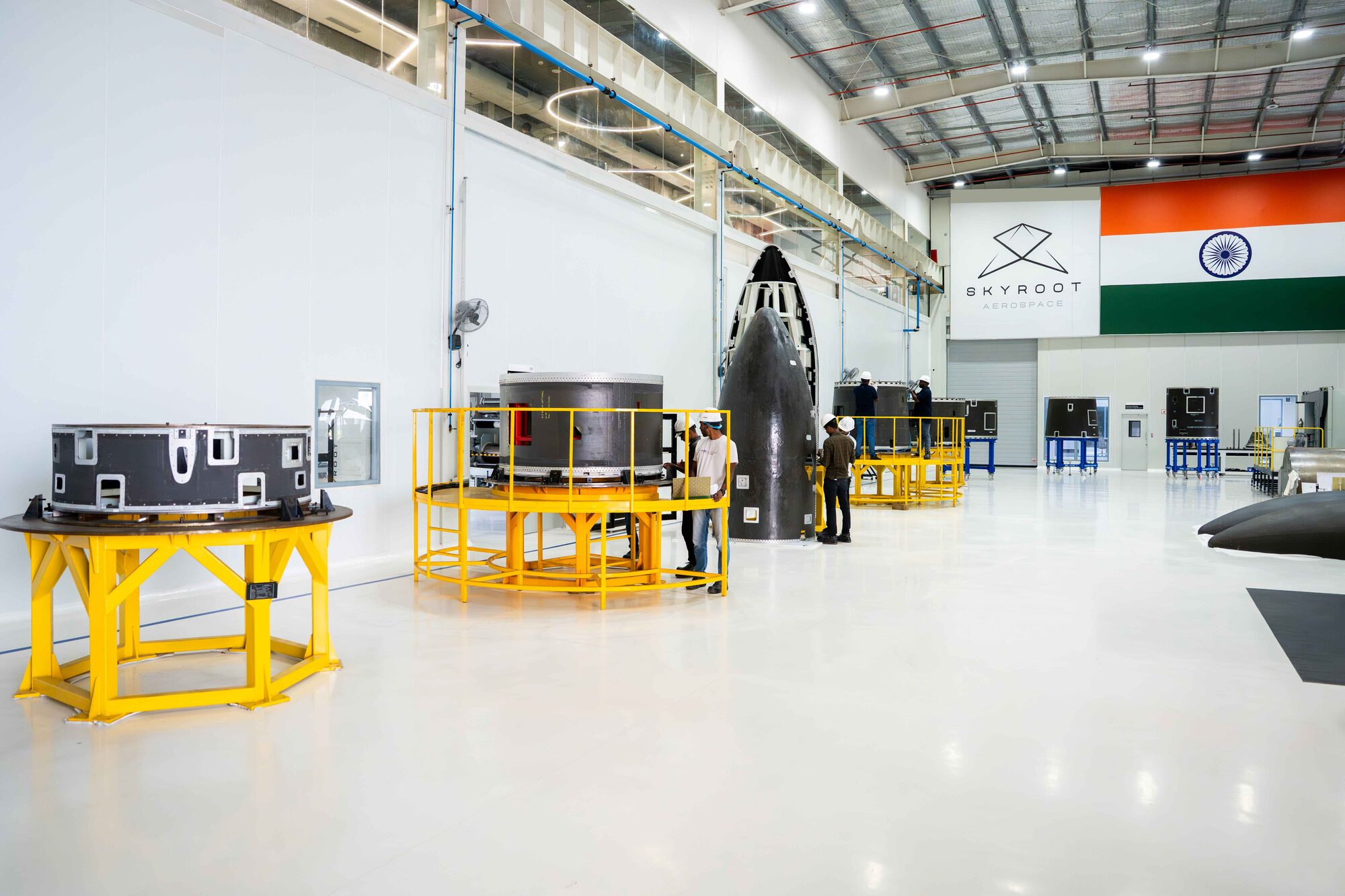
The whole rocket, horizontal on its cradles in the integration hall — blue first stage nearest the camera, fairing at the far end. Everything you just scrolled through, in one room, before anyone put fuel anywhere near it.
Vikram-1 is a small launcher, and that is the entire point. It is not competing with the rockets that lift interplanetary probes — it is competing for the smallsat that would otherwise wait eighteen months for a rideshare slot on somebody else's schedule.
Hover or tap a vehicle to compare. Silhouettes are drawn to scale by height and body diameter; they are diagrams, not engineering drawings.
Drag the scrubber. Fifteen minutes from a concrete pad in Andhra Pradesh to 450 kilometres up.
Kalam-1200 ignites. 1,000 kilonewtons of solid thrust off the First Launch Pad.
Approximate profile. Skyroot has not published a full numeric event table; Mach 1 (~T+25 s), stage-1 separation at Mach 5 (~T+90 s), the ~6-minute orbital-module burn and orbital insertion at ~T+15 min are the sourced anchors. Intermediate values are interpolated for illustration.
Two engine families, named for the three people who made Indian spaceflight thinkable: Kalam for the solids, Raman for the storable liquids, Dhawan for cryogenics. Skyroot had hot-fired every propulsion technology in Vikram-1 by the end of 2020 — twelve people, one warehouse.
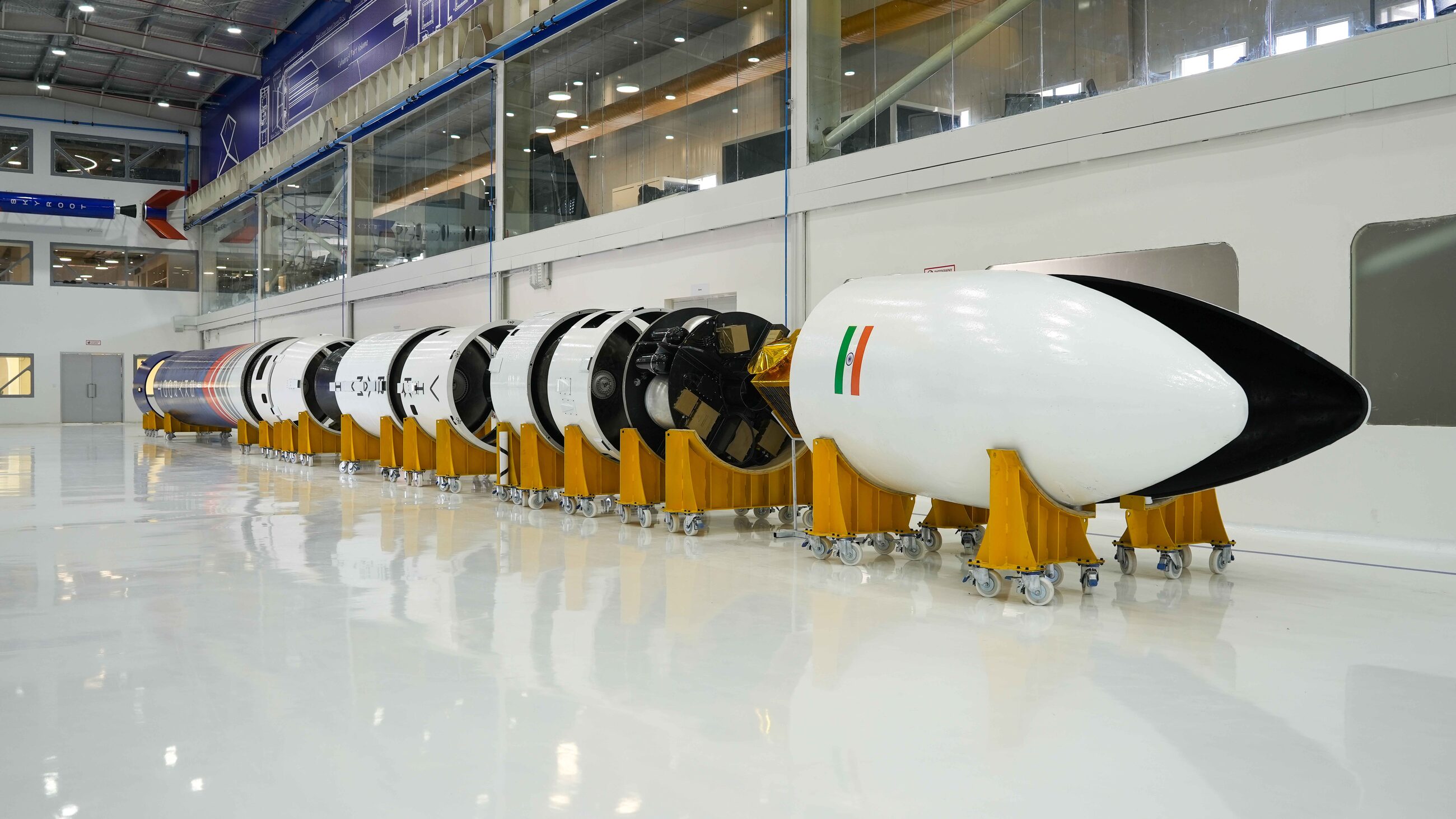
Two carbon-composite half-shells, closed around a stack of satellites, carrying a flag. Roughly two minutes into flight they will split apart, fall away, and burn.
Nearly nothing on Vikram-1 could be bought off a shelf in India in 2018. Click any card to open it.
Two free-flying satellites, three hosted technology demonstrations, and — genuinely — a gold micro-rocket carrying microscopic sculptures of Raman, Sarabhai and Kalam.
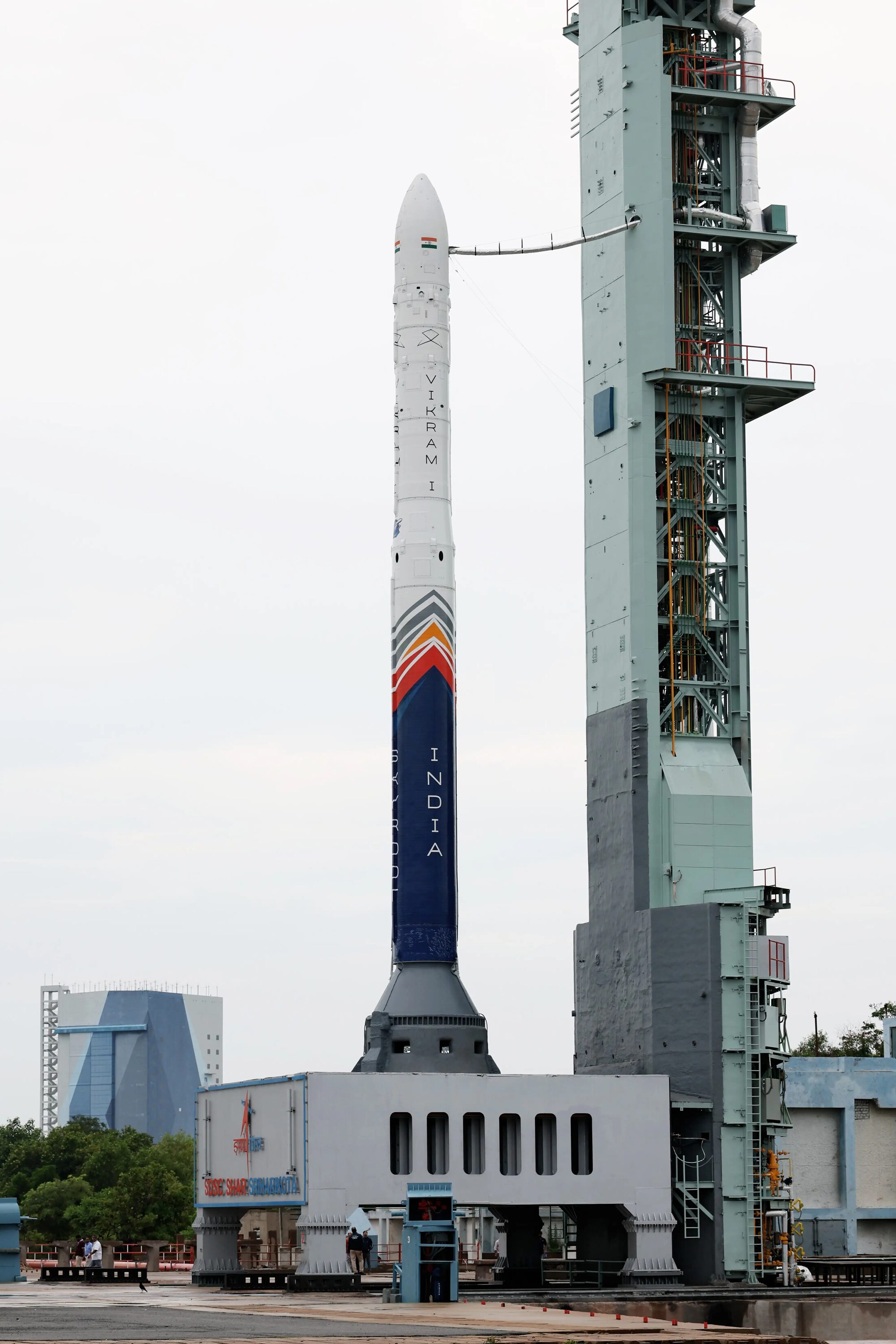
The countdown started at six in the morning and was targeting 11:30. At T–5 minutes it stopped: the handover from the ground segment to the rocket's onboard computer didn't complete cleanly. They fixed it on the pad. Thirty-five minutes later, it flew.
Skyroot did not invent a house style for naming things. Every rocket and every engine family carries the name of someone who built Indian science out of very little — and the launch site itself is named for a fourth. It is a company-wide argument that this is a continuation, not a disruption.
Four years earlier, a single-stage sounding rocket called Vikram-S flew Mission Prarambh — "the beginning". It was the first privately built rocket ever launched from India.
Drag the timeline sideways, or scroll over it.
Two ISRO propulsion engineers quit their jobs in 2018 to find out whether a private Indian company could build an orbital rocket. Eight years later, they run India's first spacetech unicorn.


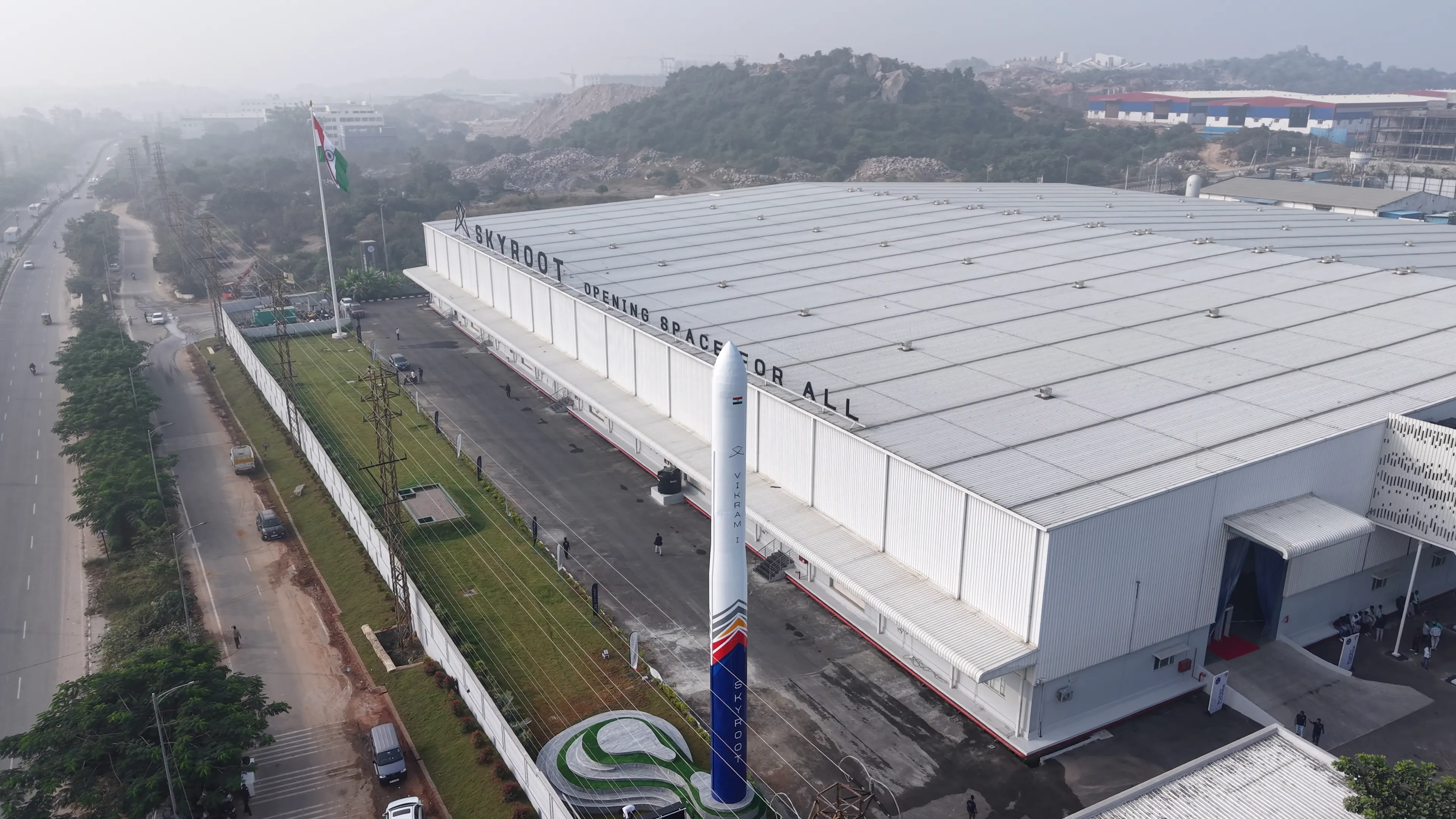
Skyroot works under an IN-SPACe authorisation with an ISRO MoU signed in September 2021 — one of the first agreements struck after India opened its space sector. ISRO cast and static-fired the big solid motors at SHAR, tested Raman-I at LPSC, and ran range safety on launch day. The rocket is private; the ground beneath it is national.
Aagaman was not the destination. It was the address.
Skyroot has signalled up to two additional Vikram-1 launches this year, converting a test vehicle into a cadence.
Strap-on solid boosters lift capacity from 350 kg to 550 kg to LEO without redesigning the core.
A fully 3D-printed Dhawan cryogenic upper stage burning liquid methane and LOx: 900 kg to LEO, 600 kg to sun-synchronous polar orbit.
“When private participation began, we had one startup.
Today, we have over 400 space startups.”
No page builder, no template, no framework — this one is hand-written HTML, CSS and JavaScript, and it loads in about a second. Scroll-driven storytelling, custom data visualisation, real interaction design. If you have something worth explaining properly, we would like to build it.